

Results of the Value Chain-Track: insight into value loss and the opportunities for value retention, willingness and committment to tackle the most important bottlenecks together, and three concrete pilots to make a start. At the core of what participants discovered: this is not something you just solve on your own.
The right people at the table
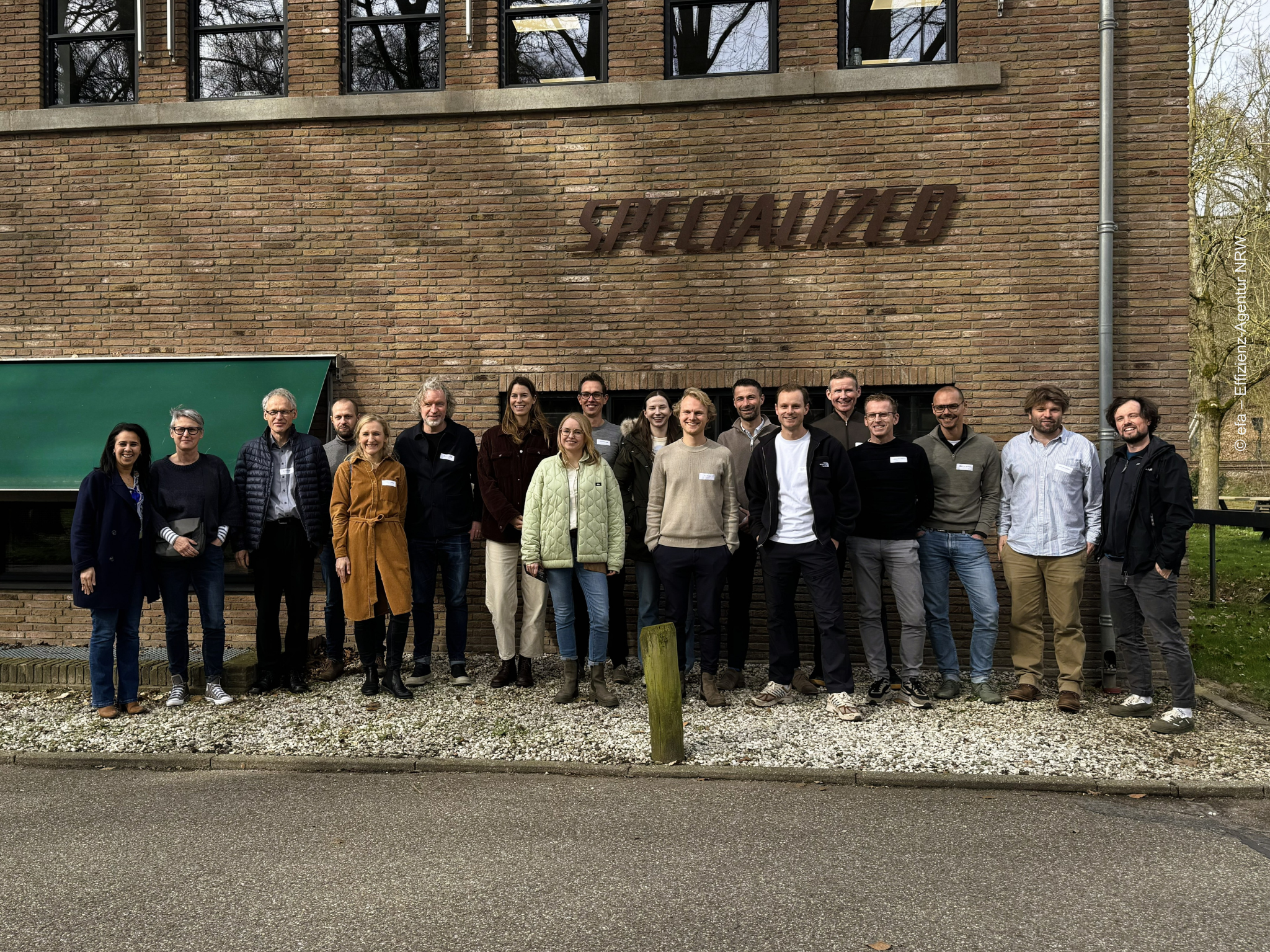
Some of the world’s largest bicycle brands took part in the very first international CIRCO Chain Track: Gazelle (Pon.Bike group), Specialized Bicycle Components, ROSE Bikes, FOCUS Bikes, Bosch eBike Systems, Accell Group, Ebikepartners, Fietsned, Lease a Bike Nederland, NOWOS, Shimano Europe Group, and Zhero Systems. The Track was organised by Shift Cycling Culture, OostNL, the Battery Competence Cluster and Effizienz-Agentur NRW. Erik Bronsvoort, Non-Executive Director of Shift Cycling Culture: “The diversity around the table was no coincidence. Large and small companies, spread across the entire chain; this is exactly what you need to organise an efficient process.”
Sylvia Aßmann, Senior Manager Sustainability at Bosch eBike Systems: “I think it’s positive that a large part of the battery value chain was present. It means the individual partners understand each other’s themes and concerns, but also how things are currently being thought about, and you can better understand the entire process and the cycles.”
From discomfort to openness
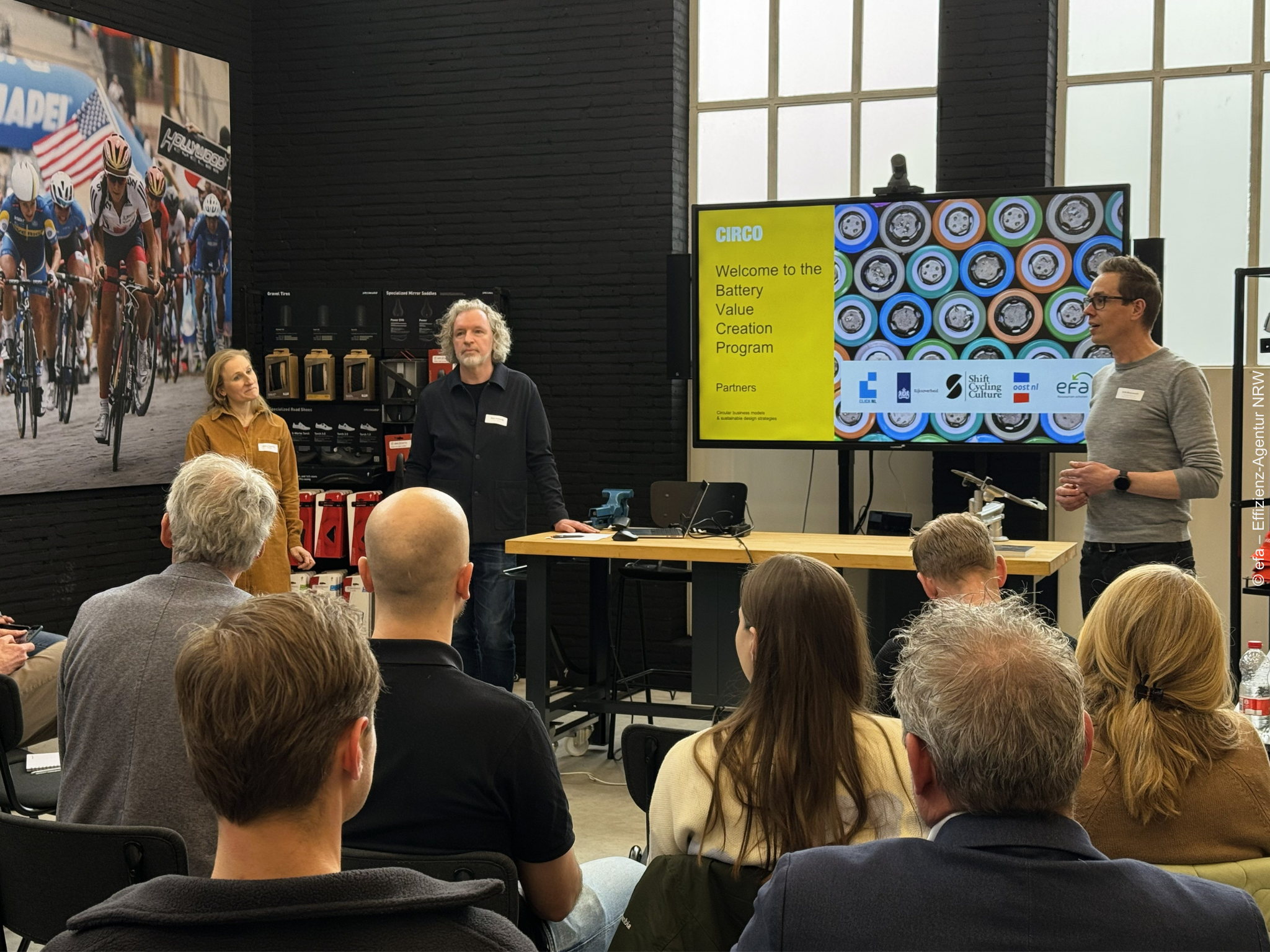
That shared understanding does not emerge automatically. CIRCO trainer Mars Holwerda recognises the early stages of a Chain Track: “When a Track begins, there are competitors in the same room. The discomfort is tangible; no one wants to be the first to share information. But within a few hours, everyone discovers they are running into the same problems, and probably need the same solutions as well. It quickly becomes clear that collaboration is the only way forward. From that point on, things move fast.”
Nadine Tiedemann, manager of the CIRCO Hub Nordrhein-Westfalen: “The international exchange between German and Dutch companies added exceptional value. It demonstrates how crucial cross-border collaboration within the circular economy is for developing solutions that go beyond national perspectives.”
Mapping value loss
At the start of the Track, participants worked with the Value Hill, the model that makes the life phases of a product visually tangible. The value of a product increases step by step during its creation (mining, production and distribution) and reaches its peak during the use phase. After that, the product loses value and slides down the hill. The model focuses entirely on value creation: how can the whole product, or parts of it, return to the phase before use?
Recycling sits at the bottom of the slope, as an absolute last resort. Yet the vast majority of batteries end up there. And of the batteries currently going to recycling, 90% still hold value. Value that is now being lost. Moreover, recycling largely takes place outside Europe, meaning critical materials such as cobalt, lithium and nickel disappear from the European chain.
Mark van der Kooi, Programme Manager Sustainability at Gazelle: “Frankly, I was shocked by the scale of the value loss. Together we mapped the value hill for e-batteries: how high the value initially is, and how steeply it drops once you move towards recycling. That business case simply does not work. This makes one thing very clear: you need to keep the value of a battery as high up that value hill as possible.”
Everyone is facing the same challenges
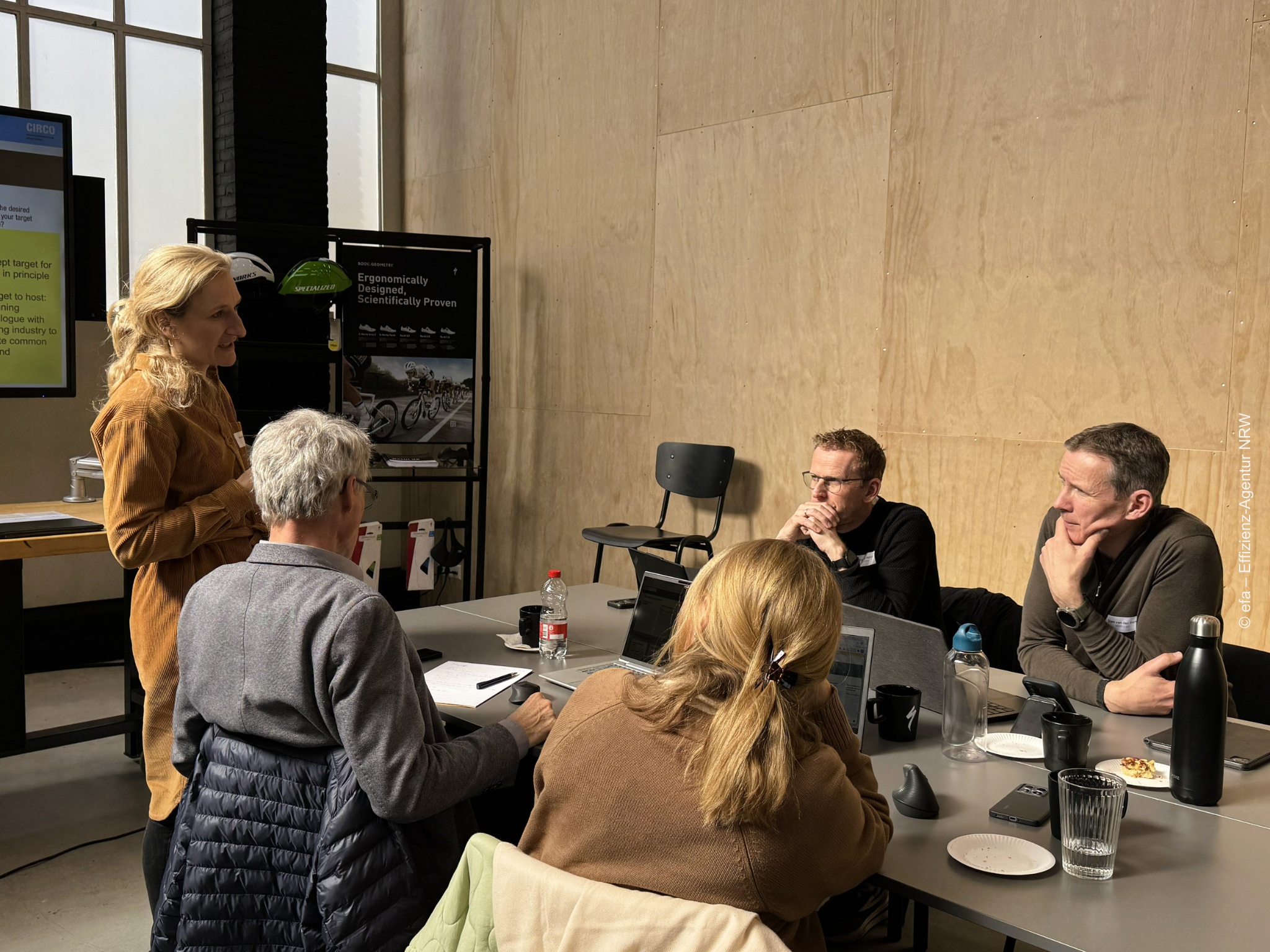
The challenges turned out to be widely shared: high transport costs for small batches, a lack of collection infrastructure, uncertainty about battery ownership, and a market without a certified repair process. Gijs Koopmans, Project Manager ESG at Specialized: “We mapped a lot of barriers. The positive thing is that these turn out to be common challenges. Other companies are struggling with exactly the same thing, and that means you can tackle them together across the industry. You cannot manage it alone.”
Elena Breuer, Team Lead Sustainability at ROSE Bikes, pointed to the European dimension: “We had great players at the table here. You notice that we can only carry these requirements and their implementation collectively, and that genuinely good results emerge when we work on them together like this.”
Participants define their own next steps
Pilot 1, Closing the Circuit, builds a shared data infrastructure to validate a European business plan. Chain partners contribute man-hours and raw data; legal frameworks and NDAs safeguard confidentiality; and an independent database owner synthesises the whole. Without that foundation, a market worth €180 million — with scaling potential up to €900 million — remains out of reach.
Pilot 2 focuses on a certified repair process for LMT batteries. EU regulation stipulates that independent repair companies must be able to carry out this process by February 2027. Certified repair saves OEMs costs on warranty replacements and lowers the risk profile for the entire chain.
Pilot 3 explores the feasibility of a European hub for collection and processing. Central to this is a neutral position: a physical location where batteries are received before waste classification applies, and where assessment, sorting and redistribution can take place.
The fact that participants themselves defined the pilots and want to take them forward says something about the energy the Track unleashed. Erik Bronsvoort of Shift Cycling Culture, one of the Track’s organisers: “This requires scale, and scale requires collaboration — with partners inside and outside the chain. Large and small companies, from design to collection. Without that diversity, you will not get there.”
Solutions you could not have imagined beforehand
The CIRCO methodology actively encourages participants to look beyond the most obvious solutions. Elena Breuer: “It really does force you to think outside the box and arrive at new ideas you would not have had without this methodology.”
Holwerda: “The material we are dealing with is complex, that much is clear. But when companies collaborate, it turns out there is a business model in it. The circular economy is essentially about reuse, repair, refurbish and remanufacture. Recycling is the last step. All the companies together have the knowledge and skills to build a solid business out of this.”
The potential reaches beyond the sector itself. A circular battery value chain generates green employment, strengthens European manufacturing, makes battery flows traceable for ESG reporting, and supports the objectives of the EU Critical Raw Materials Act. Paul Sadowski, Sustainability Manager at FOCUS Bikes: “The CIRCO Track showed me that even complex subjects can be tackled in a very concrete way within a relatively short time, provided you have the right parties at the table. And that also leads to sound solutions.”
* These comments were made by participants in conversations with CIRCO and Effizienz-Agentur NRW.
Pictures from our partner Effizienz-Agentur NRW (CIRCO Nordrhein-Westfalen)